
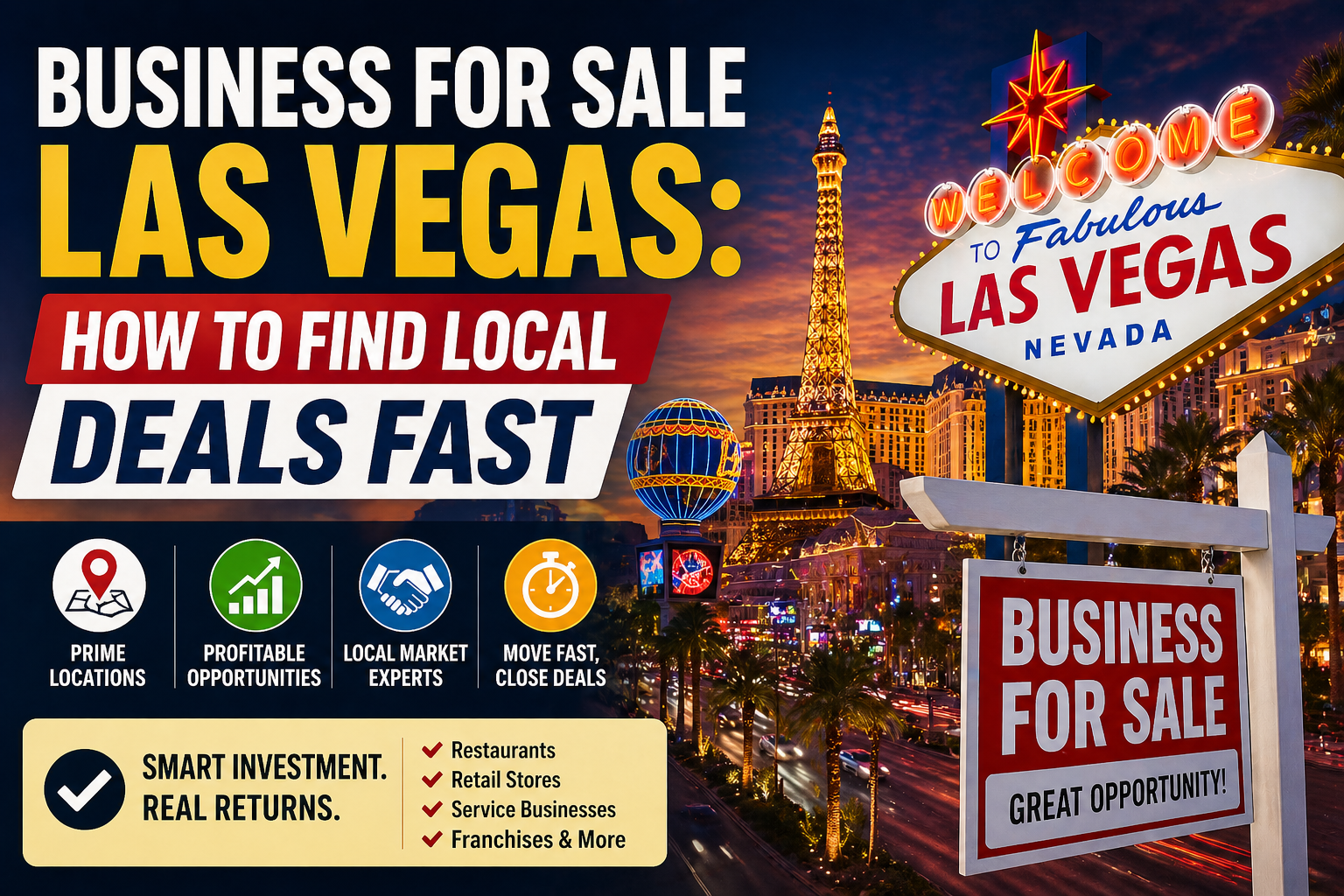
You land in Las Vegas. Neon everywhere. Energy humming through the streets. Money moving, fast.
And somewhere between the Strip and the suburbs, there’s a listing blinking on your screen:
“Profitable. Turnkey. Business for sale Las Vegas.”
It sounds easy. Almost too easy.
But here’s the truth most listings won’t tell you: finding a good deal in Vegas isn’t about luck, it’s about speed, positioning, and knowing where to look before everyone else does.
Let’s break down how to actually do it.
Why Las Vegas Is a Different Kind of Market
Las Vegas doesn’t behave like a typical city.
It runs on:
- Tourism cycles
- Population growth
- Constant business turnover
Owners burn out faster here. Concepts get replaced quickly. Investors rotate in and out more aggressively than in slower markets.
That creates something rare: constant opportunity.
But it also creates noise.
Because for every legitimate opportunity, there are multiple listings that look good on paper, but fall apart under scrutiny.
Right now, the market is shifting. Rising costs, staffing challenges, and changing consumer habits are pushing more owners to sell.
That means:
- More listings
- More negotiating power
- More chances, if you move correctly
Where to Find a Business for Sale in Las Vegas (Fast)
If you rely on just one channel, you’ll always be late.
The best deals don’t sit around.
1. Online Marketplaces (Your Starting Line)
Sites like BizBuySell and LoopNet are the obvious entry point.
You’ll find:
- Restaurants near the Strip
- Retail shops targeting tourists
- Service businesses in residential areas
- Franchise resales
These listings are easy to access, and heavily competed.
Think of them as the “public market.”
Good for learning. Occasionally good for buying.
But rarely where the best deals hide.
2. Business Brokers (Your Speed Advantage)
Local brokers operate in a different lane.
They often know:
- Which businesses are about to list
- Which owners are quietly exploring a sale
- Which listings are overpriced or risky
Working with a broker can cut your search time dramatically.
More importantly, they filter out deals that look attractive but aren’t.
In a fast-moving market like Vegas, that alone is valuable.
3. Off-Market Deals (Where Things Get Interesting)
This is where serious buyers gain an edge.
Some of the best opportunities:
- Never get listed publicly
- Sell through relationships
- Close quietly
How do you access them?
You get uncomfortable (in a good way):
- Talk to business owners directly
- Visit locations in person
- Ask questions others don’t ask
“Have you ever considered selling?”
In Vegas, relationships open doors faster than search filters.
What Types of Businesses Move Fast in Vegas
Not all businesses are equal here.
Some categories practically fly off the market.
High-Demand Sectors:
- Restaurants and cafés (tourism-driven)
- Retail and souvenir shops
- Home services (cleaning, HVAC, landscaping)
- Beauty, wellness, and fitness businesses
Why these?
Because they tap into two powerful forces:
- Tourist spending
- Local population growth
One is high-volume. The other is recurring.
Together, they create consistent demand.
How to Spot a Good Deal, Quickly
You don’t have time to overanalyze every listing.
The best buyers learn to scan for signals.
1. Clean, Consistent Cash Flow
Look for:
- At least 2–3 years of stable revenue
- Clear, documented profit margins
If numbers are vague or inconsistent, move on.
Good businesses don’t hide their performance.
2. Location That Matches the Model
Vegas is hyper-local.
A business near the Strip operates very differently from one in Summerlin or Henderson.
- Strip = tourist-driven, high volume, high volatility
- Suburbs = steady locals, lower spikes, more predictability
Neither is “better.”
But the model has to match the location.
3. Systems That Transfer
Ask yourself:
Can this business run without the current owner?
If the answer is no, you’re not buying a business.
You’re buying a job.
And probably an exhausting one.
How to Move Faster Than Other Buyers
Speed wins deals.
But speed without preparation? That’s how people make expensive mistakes.
Have Financing Ready
This is non-negotiable.
If you need time to “figure out funding,” you’ve already lost.
Serious buyers:
- Have cash ready
- Or pre-approved financing
Because when a deal appears, hesitation is fatal.
Define Your Criteria Early
Don’t browse endlessly.
Decide upfront:
- Budget range
- Industry preference
- Risk tolerance
Then filter aggressively.
Clarity saves time, and helps you act quickly when something fits.
Use Local Expertise
Las Vegas has layers of regulation many buyers underestimate.
Especially in industries like:
- Food and beverage
- Alcohol sales
- Gaming-related businesses
Licensing, permits, and compliance requirements can delay or kill a deal if you’re not prepared.
Local attorneys and advisors aren’t optional here.
They’re part of the process.
Mistakes That Kill Deals (or Cost You Money)
Most buyers don’t lose because they lack opportunity.
They lose because of how they react to it.
1. Overthinking Everything
Yes, due diligence matters.
But endless hesitation?
That’s how someone else buys the business you wanted.
2. Ignoring Market Cycles
Vegas isn’t steady year-round.
Some businesses:
- Peak during tourist seasons
- Dip during slower months
If you don’t understand the cycle, revenue can look misleading.
3. Chasing “Cheap” Listings
Low price ≠ good deal.
Often it signals:
- Poor location
- Declining revenue
- Operational issues
A slightly higher-priced business with stable income is usually the smarter move.
Pro Tips for Buyers in 2026
The market has shifted, and smart buyers are adjusting.
- Negotiate harder: Sellers are more flexible than they’ve been in years
- Look beyond the Strip: Suburban businesses often offer stability
- Focus on systems: Businesses with structure scale faster
- Think long-term: Vegas population growth supports sustained demand
- Act decisively: Speed still wins
The Bigger Picture Most People Miss
Buying a business isn’t just a transaction.
It’s a transition.
You’re stepping into:
- Existing operations
- Customer relationships
- Staff dynamics
- Market positioning
The smoother that transition, the better your odds of success.
That’s why deals with:
- Clear processes
- Strong teams
- Documented systems
…are worth more than they appear at first glance.
Final Thought: Speed + Strategy = Real Opportunity
Searching for a business for sale Las Vegas can feel overwhelming.
Too many listings. Too much noise. Too many “great deals” that aren’t actually great.
But the buyers who win?
They don’t just scroll.
They:
- Build connections
- Understand the local market
- Prepare before opportunities appear
- Move fast when the numbers make sense
Because in a city built on momentum, hesitation is expensive.
And the best deals?
They don’t go to the smartest buyer.
They go to the one who’s ready.
Frequently Asked Questions (FAQs)
How much does it cost to buy a business in Las Vegas?
It varies widely. Small service businesses may start under $50,000, while established restaurants or franchises can reach several hundred thousand or more.
Is Las Vegas a good place to buy a business in 2026?
Yes, due to population growth and increased listings. Buyers currently have more options and negotiation power than in recent years.
What industries are safest for beginners?
Service-based businesses (cleaning, maintenance, home services) tend to have simpler operations and more predictable demand.
How long does it take to close a deal?
Typically 30–90 days, depending on financing, due diligence, and licensing requirements.
Should I use a broker or buy directly?
Brokers can speed up the process and reduce risk, especially in a competitive market like Las Vegas.
*This article is for informational purposes only and should not be taken as official legal advice*