
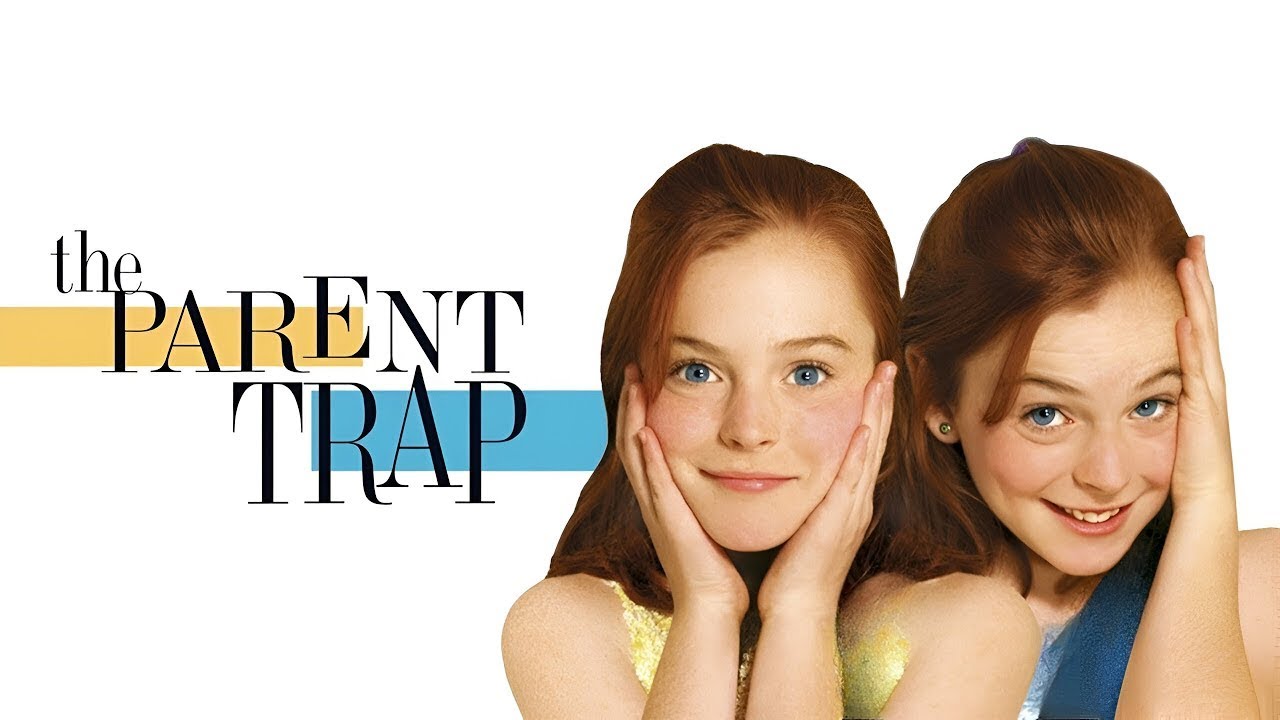
Two twins. One summer camp. Zero clue they’re related.
It’s a premise that shouldn’t work twice, but somehow, it does. Decades apart, both versions of The Parent Trap managed to charm audiences, largely thanks to one thing: the casting.
Comparing The Parent Trap cast across the original 1961 film and the 1998 remake isn’t just about spotting differences, it’s about seeing how two eras shaped the same story in completely different ways.
The Twins: One Actress, Two Personalities
Let’s start with the magic trick at the center of both films.
In the original The Parent Trap, Hayley Mills played both Sharon and Susan. It was groundbreaking for its time, split-screen effects, precise timing, and a performance that had to carry the illusion.
And it worked. Mills gave each twin a distinct personality: one polished and proper, the other more laid-back and curious.
Fast forward to the 1998 remake, Lindsay Lohan steps into the dual role of Annie and Hallie. The technology had improved, sure, but Lohan’s performance is what made it memorable. She didn’t just play twins; she played two convincingly different kids with accents, habits, and attitudes that never blurred together.
Different eras. Same challenge. Both nailed it.
The Parents: Old Hollywood vs. Modern Charm
The parents in both versions are more than background, they’re the emotional stakes.
In 1961, Maureen O’Hara and Brian Keith brought a classic, almost theatrical energy to the divorced couple. Their chemistry leaned into old Hollywood style, big expressions, sharp dialogue, and a sense of formality even in conflict.
In the 1998 remake, the dynamic shifts.
Natasha Richardson and Dennis Quaid feel more relaxed, more modern. Their performances are softer, more grounded. The tension between them isn’t dramatic in the old-school sense, it’s quieter, more emotional.
It’s the difference between watching a stage play and overhearing a real conversation.
The “Other Woman” Gets a Glow-Up
Every Parent Trap story needs a little friction, and that’s where the soon-to-be stepmother comes in.
In the original, Joanna Barnes plays Vicky, the gold-digging fiancée. She’s unapologetically villainous, almost cartoonish in her scheming.
But here’s a fun twist: Barnes returns in the 1998 version, not as the villain, but as the mother of the new one.
That new version of chaos? Elaine Hendrix as Meredith Blake. She’s younger, sharper, and somehow even more memorable. Less cartoon villain, more calculated opportunist, with a wardrobe that practically became a character of its own.
Supporting Characters: Subtle Shifts, Big Impact
Look closer, and you’ll see how the supporting cast reflects its time.
The 1961 version leans into simpler archetypes, camp counselors, house staff, and friends who serve the story without stealing focus.
The 1998 remake expands the world a bit. Characters like Martin (the loyal butler) and Chessy (the warm, grounding housekeeper played by Lisa Ann Walter) add humor and emotional depth.
They’re not just there to move the plot, they make the world feel lived in.
Tone, Timing, and Generational Energy
Casting isn’t just about who plays the roles, it’s about how those roles feel.
The original Parent Trap has a certain innocence. It’s polished, deliberate, and unmistakably of its era.
The 1998 version is quicker, wittier, and more self-aware. The cast leans into humor with a modern rhythm, making the story feel fresh rather than recycled.
And that’s the real trick: both films use casting to match their moment in time.
So Which Cast Wins?
That’s the wrong question.
The Parent Trap cast in both versions succeeds for the same reason: each film understands its audience.
The 1961 cast delivers charm, clarity, and classic storytelling.
The 1998 cast brings energy, relatability, and a bit more edge.
Same story. Same twist. Completely different flavors.
And somehow, both still feel like the “real” version, depending on when you first watched it.
*This article is for informational purposes only and should not be taken as official legal advice*