You read your horoscope. It says you’re calm, grounded, emotionally stable.
Meanwhile, you just snapped at someone over a delayed text and are now rethinking your entire life at 2 a.m.
So… which version is real?
Here’s the uncomfortable truth: your sun sign is only telling a fraction of the story. The real personality blueprint lives inside your natal chart, and if you’re not looking at the Big 3, Sun, Moon, and Rising, you’re basically reading astrology on “preview mode.”
Let’s fix that.
☀️ The Sun Sign: Your “Main Character” Energy (Or So You Thought)
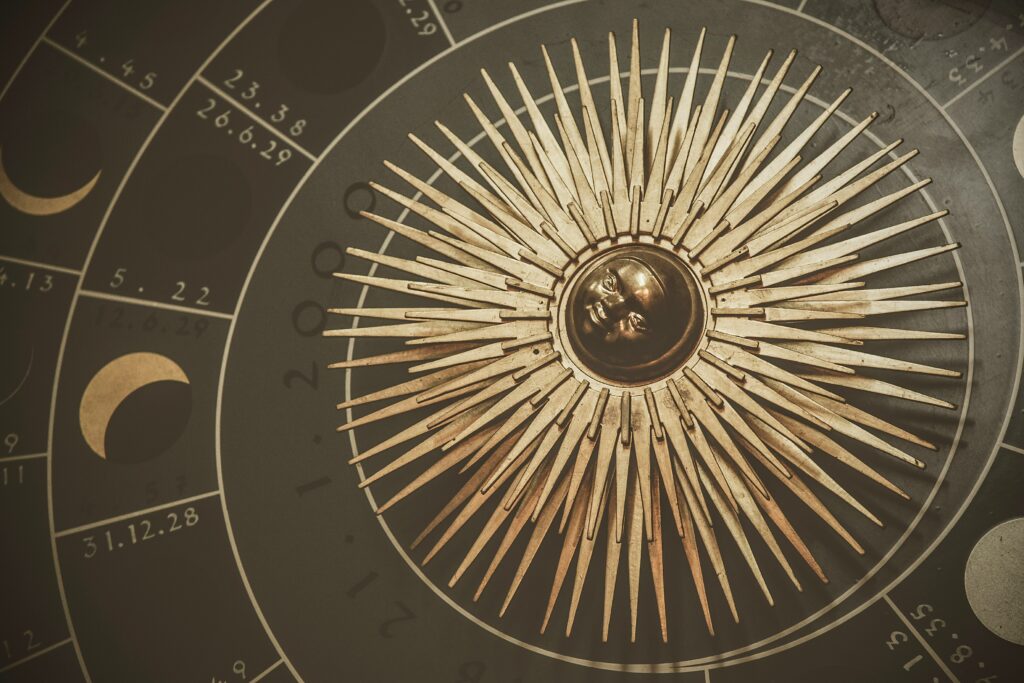
The Sun sign gets all the attention. Birthday-based. Easy to remember. Socially acceptable small talk.
But what does it actually do?
Your Sun represents your core identity, the version of yourself you’re growing into. It’s your ego, your drive, your sense of purpose. Not who you are at your most reactive, but who you are when you’re centered and intentional.
It’s aspirational, in a way.
A Sagittarius Sun wants freedom and expansion. A Taurus Sun leans into stability and comfort. You recognize it, but you don’t always live it, especially on bad days.
And that’s where people get tripped up. They expect their Sun sign to explain everything. It doesn’t. It’s just the headline, not the full article.
(And honestly? Sometimes it’s more like the trailer.)
🌙 The Moon Sign: The 2 A.M. Version of You

Now we’re getting somewhere.
Your Moon sign is your emotional operating system, the raw, unfiltered, no-one’s-watching version of you. It governs your instincts, your reactions, your internal climate.
This is the part that shows up when you’re stressed. Or tired. Or slightly jealous but pretending you’re not.
According to the American Psychological Association, emotional responses are often immediate and subconscious, shaped by early conditioning and memory. Astrology mirrors that idea through the Moon, it’s fast, reactive, and deeply ingrained.
So if your Sun says “I’m confident and composed,” but your Moon says “panic first, process later,” guess which one wins in real time?
Exactly.
An Aries Moon reacts instantly. A Cancer Moon feels everything (and then some). A Virgo Moon analyzes emotions like a spreadsheet, helpful, but exhausting.
This is why you don’t always recognize yourself in your Sun sign description. Because your Moon is running the emotional show behind the scenes.
⬆️ Rising Sign: The First Impression That Lies (A Little)

Ever met someone who seemed quiet and reserved… until they weren’t?
Blame the Rising sign.
Also called the Ascendant, your Rising sign is the energy you project when you enter a room. It shapes first impressions, body language, and how people read you before they actually know you.
It’s instinctive. Automatic. Not fake, but not the full picture either.
Your Rising sign is determined by the exact time and place you were born, based on what was rising on the horizon. If you’re curious how that’s even calculated, agencies like NASA explain planetary positioning and movement, the astronomy behind astrology’s symbolism.
In practice?
- Leo Rising walks in like they own the place (even if they’re nervous inside)
- Pisces Rising feels soft, dreamy, maybe a little hard to read
- Capricorn Rising? Composed. Polished. Slightly intimidating
It’s the vibe before the personality. The cover before the content.
And yes, people will judge you on it. Quickly.
The Big 3 Together: A Personality Tug-of-War
Here’s where things stop being neat and start being real.
Your Big 3 don’t always agree.
Your Sun pushes you forward, growth, identity, long-term direction.
Your Moon pulls you inward, comfort, safety, emotional habits.
Your Rising filters everything, what people see versus what’s actually happening.
Sometimes they align. Life feels smooth. You feel like yourself.
Other times? Total contradiction.
You might have:
- A bold Aries Sun that wants action
- A cautious Pisces Moon that avoids conflict
- A polished Libra Rising that just wants everyone to get along
So what happens?
You hesitate. Then overthink. Then smile politely while internally spiraling.
Sound familiar?
That’s not inconsistency. That’s your natal chart doing its thing, layered, complex, occasionally inconvenient.
Why Your Natal Chart Hits Harder Than a Daily Horoscope
Daily horoscopes are written for millions of people at once. Your natal chart? It’s specific to the minute you were born.
That level of detail matters.
It explains why two people with the same Sun sign can feel completely different. Because they are different. Their Moon and Rising signs shift everything, from emotional responses to social behavior.
It’s less “you are this” and more “you tend to do this when…”
Subtle. But way more useful.
Reading Your Big 3 Without Spiraling Into Astrology Overload
Let’s be honest: natal charts can get complicated fast. Houses, aspects, retrogrades, it’s a lot.
So don’t start there.
Start here:
- What does your Sun say you want to be?
- What does your Moon reveal about how you actually feel?
- What does your Rising show people before you even speak?
Then compare.
Where do they match? Where do they clash?
That gap? That’s where your real personality lives, not in a single sign, but in the tension between them.
A Slightly Opinionated Take (Because It Needs Saying)
Astrology works best when you use it as a mirror, not a script.
Your natal chart isn’t here to box you in or excuse your behavior. It’s here to give you language for patterns you already live.
So no, you’re not “bad at relationships because of your Moon sign.”
But you might react quickly, withdraw emotionally, or avoid vulnerability, and your chart can help you notice that.
Awareness first. Labels second.
Final Thought: You’re Not One Sign, You’re a System
The Sun gets the spotlight. The Moon runs the emotional background. The Rising handles PR.
Together? They create a version of you that’s layered, contradictory, and, occasionally, confusing.
But also accurate.
So the next time your horoscope feels a little off, don’t throw astrology out completely.
You’re just reading one-third of your natal chart.
And honestly? That was never going to be enough.
*This article is for informational purposes only and should not be taken as official legal advice*