
The first delay doesn’t look like a big deal.
A crew in one state starts work without the updated plan. Another team, hundreds of miles away, is waiting on materials that were rerouted hours ago. Someone says, “We sent that update.”
Maybe they did. Maybe it got buried in a message thread. Maybe it never reached the right person.
This is what multi-state construction projects look like without unified communication: small gaps that quietly turn into expensive problems.
And that’s exactly where modern walkie talkies step in, not as a throwback tool, but as a surprisingly effective command system.
Start with One Network, Not Five
Here’s the common mistake: treating each job site like its own island.
Different communication tools. Different workflows. Different ways of sharing updates. It works locally, but across states, it creates fragmentation.
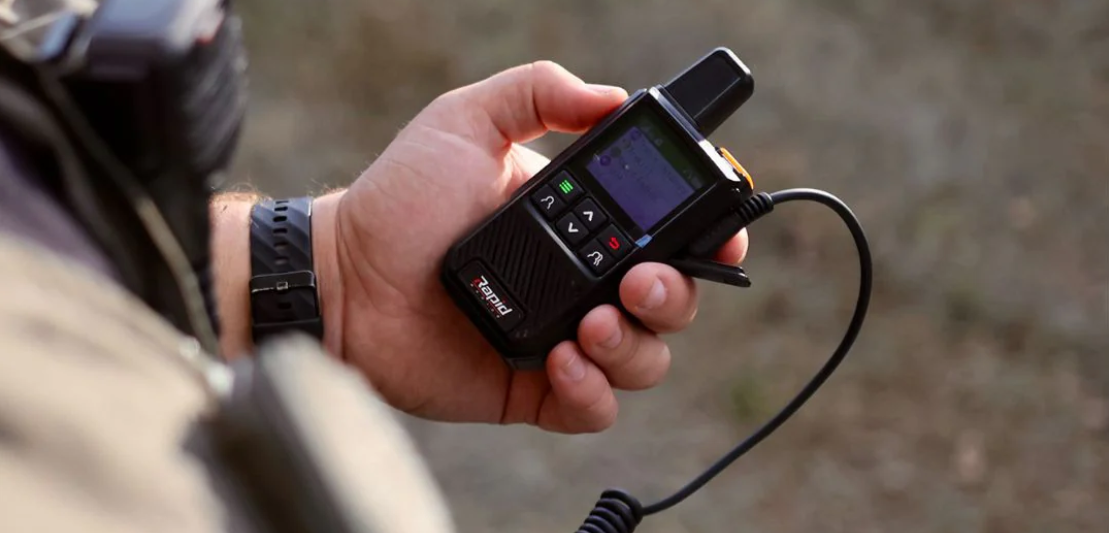
Nationwide walkie talkies solve that by putting every site on the same network.
One system. One structure. One way to communicate.
It doesn’t matter if your teams are in different cities or time zones, everyone operates within the same communication framework. And that consistency alone removes a lot of friction.
Organize Channels Like You Organize Crews
More communication isn’t always better. In fact, too much of it creates noise.
The key is structure.
Modern walkie talkies allow you to set up channels based on:
- Job sites (Texas crew, Florida crew, etc.)
- Roles (project managers, equipment operators, logistics)
- Functions (deliveries, safety, coordination)
So instead of one chaotic stream of messages, you get organized communication that mirrors how your teams actually work.
Need to reach everyone? Broadcast.
Need to coordinate a specific site? Use a dedicated channel.
It’s controlled, not cluttered.
Real-Time Updates Without the Lag
Construction projects don’t wait for email replies.
Plans change. Deliveries shift. Conditions on-site evolve in real time.
And if your communication can’t keep up, you’re always reacting instead of leading.
That’s where push-to-talk shines.
With walkie talkies, updates happen instantly. No typing. No waiting. No wondering if someone saw the message.
You press. You speak. It’s heard.
Across all sites.
And suddenly, decisions move faster because information does.
Bridge the Gap Between Field and Management
One of the biggest challenges in multi-state projects is the disconnect between the field and leadership.
Project managers rely on reports. Crews rely on instructions. Somewhere in between, details get lost.
Nationwide walkie talkies close that gap.
Managers can communicate directly with on-site teams in real time. Questions get answered immediately. Issues get escalated without delay.
There’s no need to wait for a meeting or a report.
Everyone stays aligned, continuously.
Use Location Awareness to Stay Ahead
Knowing what’s happening is good.
Knowing where it’s happening? Better.
Many modern walkie talkies include GPS tracking, giving visibility into where crews and equipment are across different sites.
That means:
- Faster dispatching of resources
- Smarter coordination between locations
- Immediate awareness when something goes off track
It’s not about monitoring, it’s about making better decisions with better information.
Scale Without Rebuilding Your System
Growth is where most communication setups fall apart.
New state. New site. New system?
That approach doesn’t scale.
Nationwide walkie talkies are built to grow with you.
Adding a new project doesn’t mean starting from scratch. You simply integrate new teams into the existing network, same channels, same structure, same tools.
No extra infrastructure. No complicated rollout.
Just expansion without disruption.
Choose Tools That Match the Complexity of the Job
Not all communication systems are built for multi-state operations.
Some work fine locally, but struggle when stretched across regions.
Modern solutions, like those you’ll find when you learn more, are designed specifically for wide-area coordination, combining instant communication with nationwide reach.
Because managing one site is hard enough.
Managing several shouldn’t mean juggling disconnected tools.
Final Thought: Consistency Is What Keeps Projects on Track
Multi-state construction projects don’t fail because of one big mistake.
They fail because of small misalignments that stack up over time.
Missed updates. Delayed responses. Teams working off different information.
A unified walkie talkie network doesn’t eliminate every challenge, but it removes one of the biggest: inconsistent communication.
And when everyone hears the same message at the same time, things tend to run a lot smoother.
Even across state lines.
*This article is for informational purposes only and should not be taken as official legal advice*